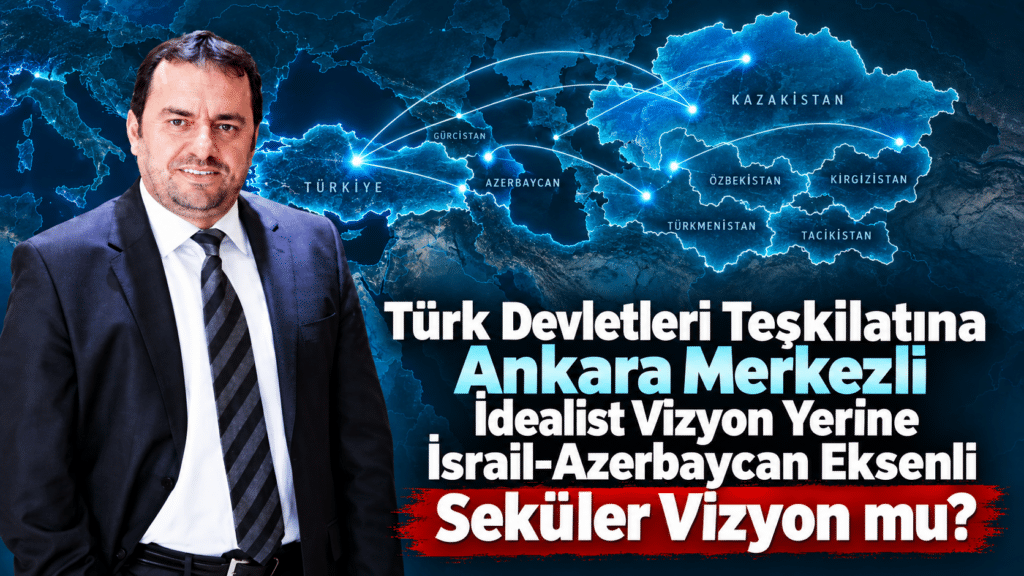
Ankara-Centered Idealist Vision or Israel-Azerbaijan-Axis Secular Vision for the Organization of Turkic States?
Mustafa Özbay / Economist-CFO-Writer
The hijab tension that has recently come to the surface in Turkey-Azerbaijan relations, the messages thought to have been sent from Baku to Ankara stating "Do not interfere in our education policies and internal affairs," and the subsequent mutual harsh evaluations are neither an ordinary diplomatic accident nor an ideological debate. Looking at the big picture, I believe there is a covert struggle between the Ankara-centered idealist vision and the Israel-Baku-centered pragmatic vision regarding the future of the Organization of Turkic States (OTS).
While dozens of countries left the hall when the Israeli Prime Minister took the podium at the UN General Assembly, the Azerbaijani delegation's continued sitting in their seats, and Aliyev's continued contacts with the Israeli administration and critical energy/trade ties show that this picture is not a coincidence. After a certain period passed since the Karabakh Victory, Baku put distance between itself and Ankara, deepening its bilateral contacts with Central Asian actors such as Uzbekistan and Kazakhstan, and entered into an effort to draw a new framework for the Turkic world integrated with Israel and the global system.
1. From Karabakh to the Tel Aviv Strategy: The Search for a "Shadow Patron"
Turkey had proven its regional power and consolidated its position as the "natural founder" of the Turkic world with the unlimited military and diplomatic support it gave to Azerbaijan in Karabakh. However, after the victory was achieved, Baku did not want to keep its security and foreign policy architecture solely on Ankara's axis.
The Baku administration deepened its strategic partnership with Tel Aviv even further through defense technologies, intelligence sharing, and the oil trade flowing to Israel via Ceyhan. Israel has become not only a arms supplier for Azerbaijan, but also a protective umbrella in the eyes of Western global finance and lobbies. This situation has given Baku room to maneuver in Turkic world politics independently of Ankara.
2. The New Turkic Union Framework Attempted to Be Drawn Despite Ankara
The Union of Turkic States dreamed of by President Erdoğan aimed to be an anti-Zionist, anti-imperialist power center independent in the East-West balance. However, from the perspective of Tel Aviv and Western strategists, a strong Turkic bloc led by Turkey and acting in synchronization with the Islamic world began to be seen as a major threat factor.
It is precisely at this point that Israel-Azerbaijan cooperation offers a new diplomatic framework:
Secular and Pragmatic Axis: The reflexes of the Turkic republics in Central Asia (Uzbekistan, Kazakhstan) that prioritize a laicist/secular state structure and economic stability rather than conservative or political Islamist rhetoric are being consolidated by Baku.
Pushing Ankara Out of the Frame: The administrative and intellectual center of gravity of the Organization of Turkic States is desired to be shifted away from Ankara's assertive/interventionist rhetoric to the Baku-Central Asia line, which has no commercial obstacles with Tel Aviv and the West.
The harsh reaction shown by Baku over the hijab crisis is actually an open embargo placed on the export of Turkey's socio-political model to the Turkic world.
3. Where is the New Architecture Evolving?
It appears that Ilham Aliyev, taking behind him the support of Israel's intelligence, technology, and global lobby, is aspiring to become the new geopolitical game-maker of the Turkic world. Within this "New Turkic Union" framework constructed with Israel's support;
The fruits of the military support provided by Turkey in Karabakh have been harvested, but an attempt is being made to remove Ankara from being the sole decision-maker.
Erdoğan's "global justice" and Palestine-focused foreign policy are being consciously tried to be kept away from being the common agenda of the Turkic world.
Baku is trying to transform the Turkic world into a pragmatic energy and trade corridor that does not conflict with Tel Aviv and the Western global system, but on the contrary, works in harmony with these powers.
Conclusion
The question is this: Will Turkey accept losing the ideological and political leadership of the Turkic Union, of which it is the founder, to an Israel-backed pragmatic Baku axis, despite its military and diplomatic architecture in the Karabakh victory? Or will it make moves to make its weight at the table felt once again against this silent power shift in the Turkic world?
More stories you might like
 Field Reports / Volunteer Correspondentsel“Strategic Alliance” and Cultural Frictions on the Ankara-Baku Axis: Crisis or Calibration?Read article
 Field Reports / Volunteer Correspondentsel“Not Israel, but Riyadh”Read article
 Field Reports / Volunteer CorrespondentselNetanyahu, Ben-Gvir and 33 Senior Israeli Officials Will Be Tried in AbsentiaRead article
 Field Reports / Volunteer CorrespondentselNew Geopolitical Map in the Middle EastRead article
 Field Reports / Volunteer CorrespondentselAlarm in Egypt: Sisi Warned His People: “You Can’t Stand Up This Time”Read article
Last updated: 14.10.2026 09:49
Follow this story
Report a correction
To submit a question or correction, sign in. If you do not have an account, you can apply through the newsroom.
To ask questions about this article, sign in.
Audio playback uses voices available on your device.
Share this article
One share helps more people hear the story.
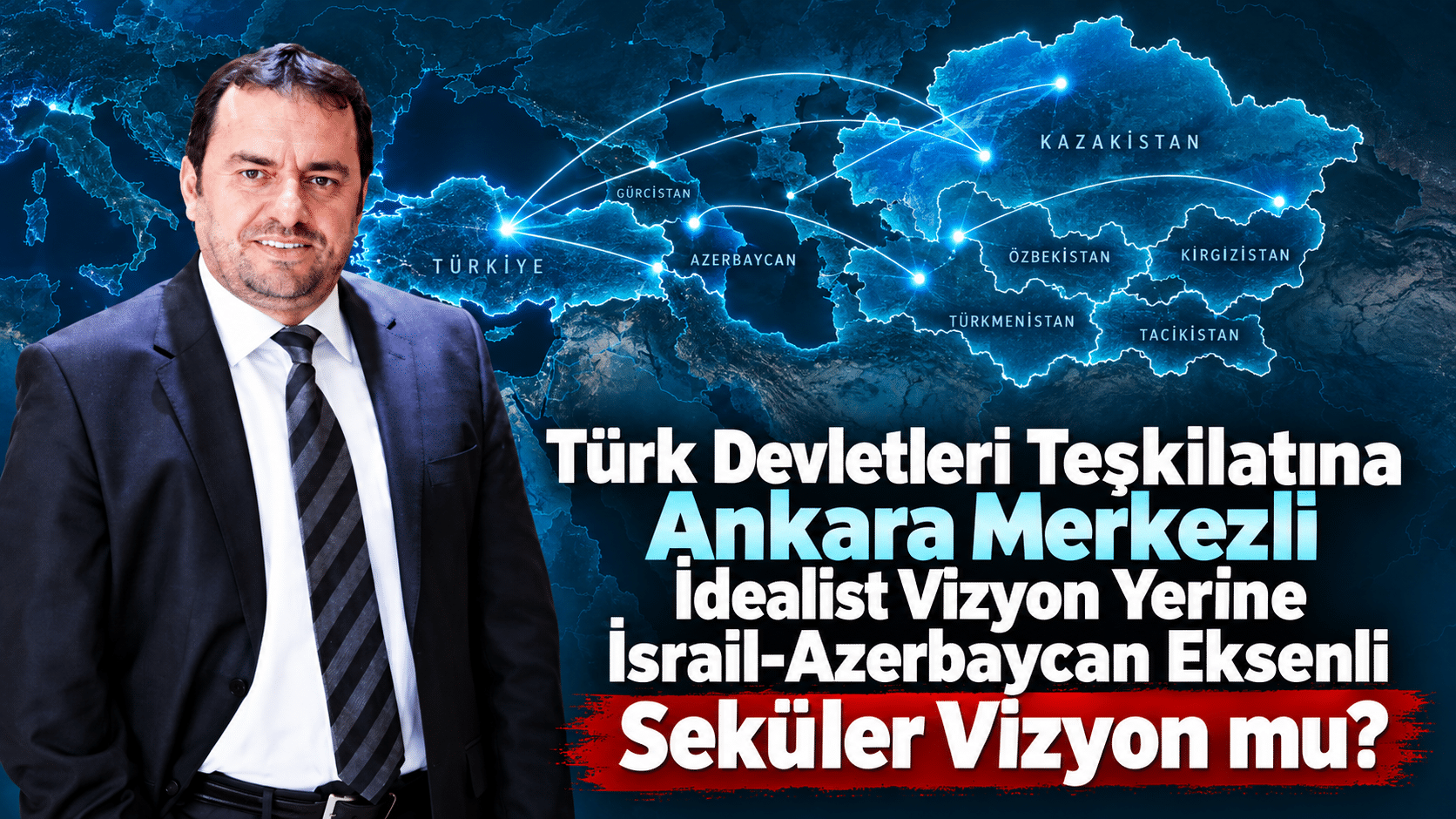
Ankara-Centered Idealist Vision or Israel-Azerbaijan-Axis Secular Vision for the Organization of Turkic States?
Mustafa Özbay / Economist-CFO-Writer
freenews.tr · Mustafa Özbay /Ekonomist-CFO-YazarFor TikTok, YouTube, Snapchat, Messenger, Signal, Discord and Mastodon, copy the text and add the image manually. Your device’s share menu lists only supported apps.
This button does not publish posts or videos automatically. Download the image and share it with the text and link below.
Download the image, copy the caption and add both to a new Instagram post. If Instagram appears in your phone’s share menu, you can select it.
1080 × 1350 pixels. Captions may not be transferred automatically. Copy the text and paste it into the description; add the article link to your profile or story.
WhatsApp formats the title in bold and separates paragraphs. The receiving platform creates the link preview; no image file is attached automatically. To share an image, download the card and copy the text.
Tags: Ankara-Centered, İdealist, Israel-Azerbaijan-Axis, Organization, Secular, States, Turkic, Vision
Leave a Reply