
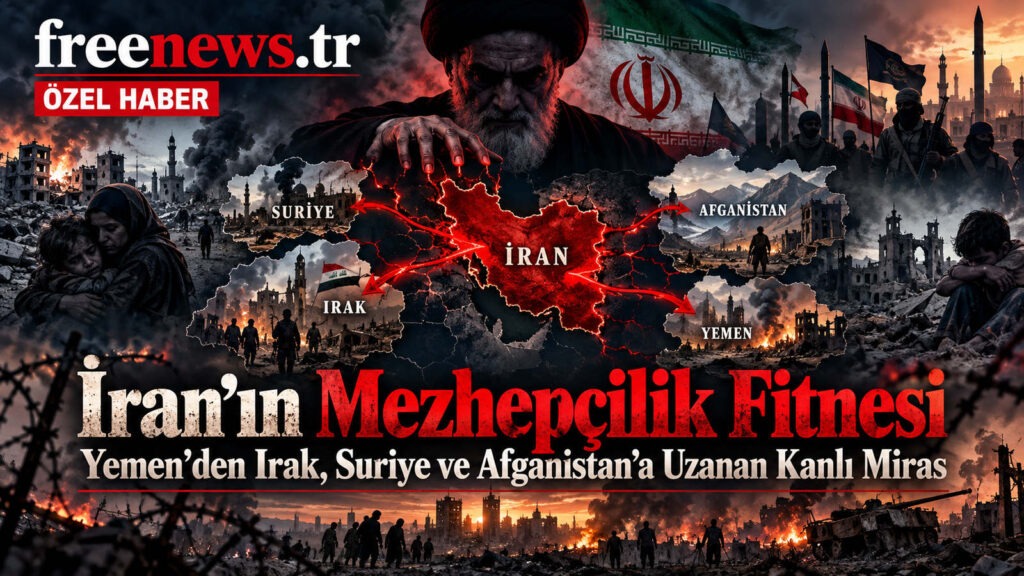
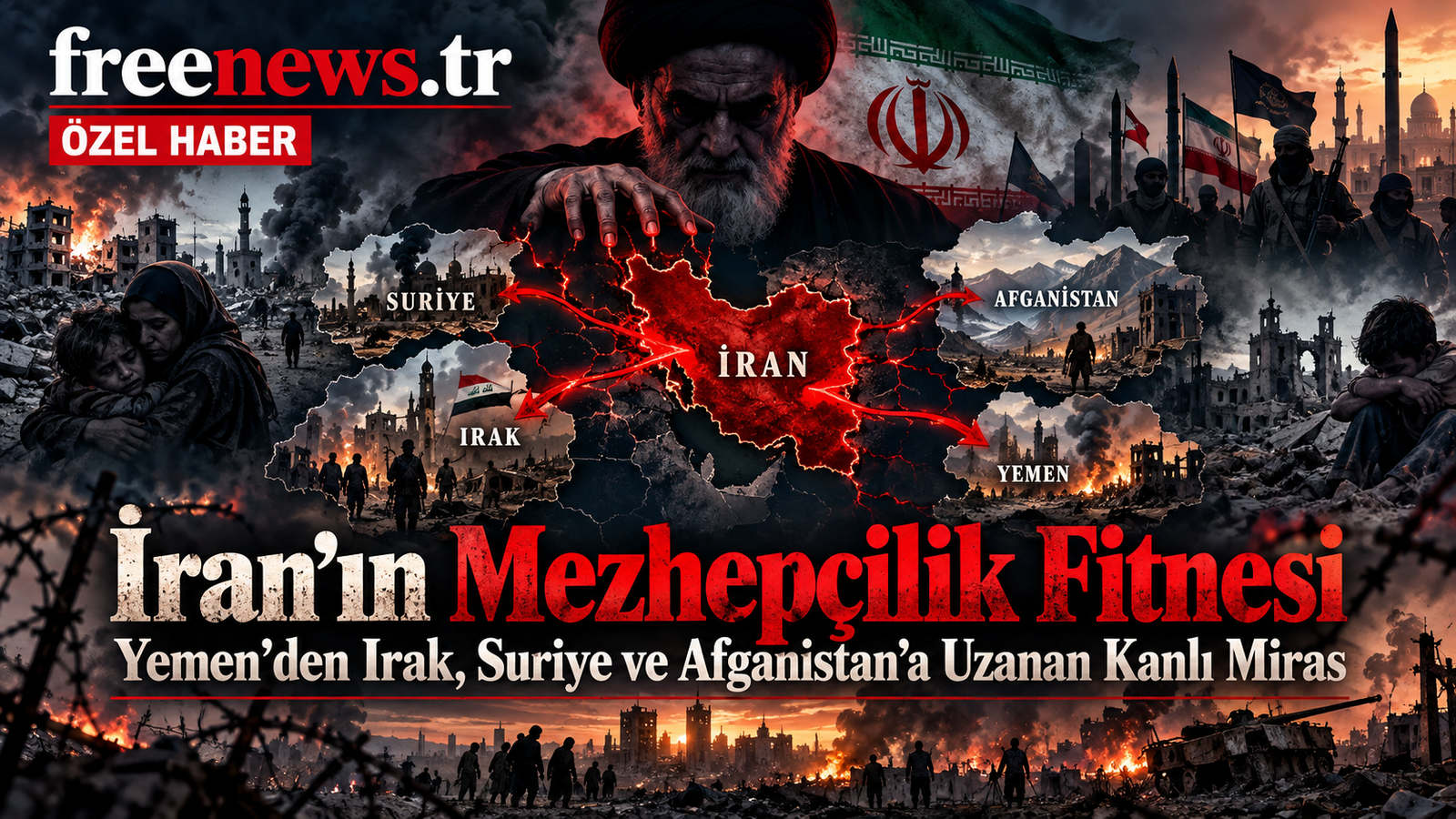
Iran’s Sectarian Sedition: The Bloody Legacy Extending from Yemen to Iraq, Syria, and Afghanistan
FreeNews.TR Analysis
October 11, 2026
The re-escalating conflict in Yemen is not merely a showdown between Houthi militias and Saudi Arabia; it is the most recent link in the sectarian sedition systematically introduced to the region by Iran. Providing weapons, training, and political support to the Zaydism Shiite Houthi movement, Tehran applied the same strategy in Iraq, Syria, and Afghanistan, laying the groundwork for the deaths of millions of Muslims. The recent attack targeting Riyadh Airport once again exposed the civilian toll of this long-term policy.
The Missile in Riyadh and the Human Shield in Yemen
In the missile attack that hit King Khalid International Airport on October 10, at least 12 people were killed and more than 300 were injured. Among the dead were Saudi citizens as well as civilians of various nationalities. The Saudi-led coalition described the attack as a 'full-scale war crime,' holding the Iran-backed Houthi militias responsible. Casualties had also occurred in previous attacks targeting the airport within the same week.
The Saudi side argues that the Houthi leadership uses civilians as human shields, taking refuge in civilian areas to evade responsibility in both the internal conflicts within Yemen and cross-border attacks. According to UN data, documented civilian deaths in Yemen since August include 15 children, while the number of displaced people exceeds hundreds of thousands. Even though both sides claim they are 'protecting the innocent,' the vast majority of the dead and injured are Muslim civilians.
The Sedition Iran Brought to Yemen
The Houthi movement grew stronger after capturing Sana'a in 2014, with the support of ballistic missiles, unmanned aerial vehicles, and military advisors coming from Iran. Tehran's 'Axis of Resistance' strategy turned Yemen into a front against Saudi Arabia. This support did not merely increase military capacity; it sharpened Zaydism Shiite identity as a political and military identity against the Sunni majority. The result has been a civil war continuing since 2015 that has cost tens of thousands of lives. Although the Saudi coalition's air operations have also caused civilian casualties, the main external actor deepening the sectarian dimension of the war has been Iran, which provided systematic support to the Houthis.
The Same Pattern in Iraq, Syria, and Afghanistan
Iran's policy of establishing influence through sectarianism is not limited to Yemen. In the post-2003 period in Iraq, violence targeting the Sunni population through Shiite militias (such as the Popular Mobilization Forces and similar groups) led to the deaths of hundreds of thousands of people and the displacement of millions. The military, financial, and militia support given to the Assad regime in Syria contributed to the deaths of hundreds of thousands of Muslims (both Sunni and Alawite/Shiite) in the civil war that has been ongoing since 2011. In Afghanistan, post-Taliban groups supported by Iran and sectarian tensions fueled internal instability.
The common point in these countries was this: Iran used Shiite identity as a foreign policy tool to arm, train, and politically direct local actors. The rhetoric of 'sectarian resistance' was used as a tool of legitimacy against Sunni administrations or majorities. The result has been long-term conflicts where Muslim groups, declaring each other 'heretical' or 'collaborators,' targeted one another. The Houthi advance in Yemen and the missile attacks targeting Riyadh are the manifestation of this model on the shores of the Red Sea.
Analysis: Same Faith, Common Victims
The claim that 'a Muslim does not kill a Muslim' collapsed repeatedly in the face of the sectarian sedition Iran introduced to the region. While Houthi militias targeted civilian airports in Yemen, militias struck Sunni neighborhoods and camps in Iraq and Syria. In both cases, the justification was presented as 'resistance' or 'security'; however, those who died were largely Muslim civilians. Although Saudi Arabia's operations in Yemen have also been the subject of criticism, the primary external factor that created and sustained the sectarian depth of the conflict has been Tehran's systematic support.
The Riyadh Airport attack demonstrates the current cost of this policy. An Iran-backed militia strikes civilian infrastructure in the capital of a Muslim country; in return, Muslim civilians die. Millions of deaths and displacements in Yemen, Iraq, Syria, and Afghanistan serve as proof of how sectarianism has been weaponized by external actors. As long as the conflict continues, people 'believing in the same book' targeting each other will also continue.
#YemenWar #SectarianSedition #RiyadhAirportAttack #IranBackedHouthis
Last updated: 12.10.2026 06:52
Follow this story
Report a correction
To submit a question or correction, sign in. If you do not have an account, you can apply through the newsroom.
To ask questions about this article, sign in.
Audio playback uses voices available on your device.
Share this article
One share helps more people hear the story.
Iran’s Sectarian Sedition: The Bloody Legacy Extending from Yemen to Iraq, Syria, and Afghanistan
FreeNews.TR Analysis October 11, 2026
freenews.trFor TikTok, YouTube, Snapchat, Messenger, Signal, Discord and Mastodon, copy the text and add the image manually. Your device’s share menu lists only supported apps.
This button does not publish posts or videos automatically. Download the image and share it with the text and link below.
Download the image, copy the caption and add both to a new Instagram post. If Instagram appears in your phone’s share menu, you can select it.
1080 × 1350 pixels. Captions may not be transferred automatically. Copy the text and paste it into the description; add the article link to your profile or story.
WhatsApp formats the title in bold and separates paragraphs. The receiving platform creates the link preview; no image file is attached automatically. To share an image, download the card and copy the text.
Tags: İran
Leave a Reply